전체 문서
이 페이지 목차
Session 실행 루프
상위 경로: Norma 시스템 지도 → 기능 지도 → Session 실행
agentcore.NewSession은 host configuration을 stateful 실행 객체로 조립한다. provider와 system prompt를 자동 선택하지 않는다. Tools == nil일 때만 DefaultTools를 넣고, 비어 있지만 non-nil인 slice는 “기본 도구 없음”을 뜻한다. optional plan, memory, skill, web, todo, ask-user, deferred, background 기능이 같은 registry에 추가된다. 같은 이름을 다시 등록하면 오류가 아니라 뒤의 tool이 교체한다. Session 구성 근거 registry 근거
| 입력 묶음 | 조립 결과 | 판단을 바꾸는 조건 |
|---|---|---|
| Provider, prompts, model options | model request template | provider nil/오류는 construction 때 모두 검증되지 않음 |
| Tools, permission, hooks | registry와 action pipeline | nil Tools만 defaults; plan mode는 live controller를 사용 |
| Compaction / Compactor | 하나의 context manager | custom Compactor가 있으면 built-in 설정은 warning 뒤 무시 |
| Transcript / SessionID | recorder와 resume identity | 빈 ID는 생성되지만 Noa wiring 순서와 별도 확인 필요 |
| budget / settlement | Prompt별 loop limits | MaxDuration은 turn/tool 경계 중심이며 model hard deadline이 아님 |
| WorkingDir / BashEnv / output | tool execution context | 편의 설정이며 sandbox나 credential broker가 아님 |
Session은 concurrent Prompt를 지원하지 않는다. messages, usage, plan controller와 writer 전체를 보호하는 Prompt-level lock이 없으므로 병렬 task는 독립 Session과 run identity를 사용해야 한다.
Prompt 생명주기
Prompt 생명주기 · 관계
이 대상이 사용하는 구현·계약·의존 · 3개
- 구현 담당 · agentcore와 harness · · agentcore-prompt · harness-query
- 계약 사용 · Session options와 public lifecycle · · agentcore-newsession · agentcore-prompt
- 계약 사용 · Event와 terminal · · harness-event
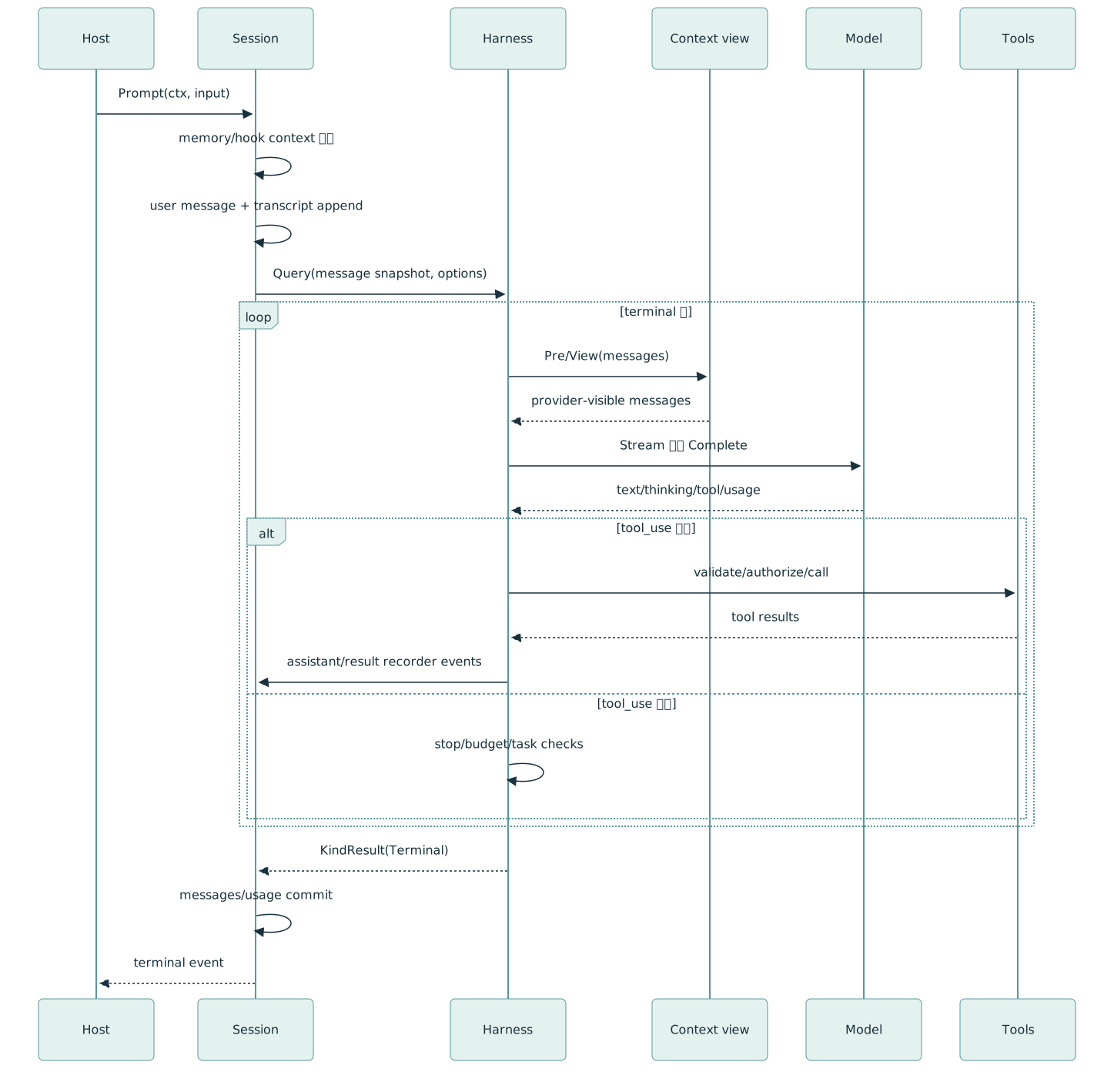
Mermaid 원문
sequenceDiagram
  participant Host
  participant Session
  participant Harness
  participant View as Context view
  participant Model
  participant Tools

  Host->>Session: Prompt(ctx, input)
  Session->>Session: memory/hook context 합성
  Session->>Session: user message + transcript append
  Session->>Harness: Query(message snapshot, options)
  loop terminal 전
    Harness->>View: Pre/View(messages)
    View-->>Harness: provider-visible messages
    Harness->>Model: Stream 또는 Complete
    Model-->>Harness: text/thinking/tool/usage
    alt tool_use 있음
      Harness->>Tools: validate/authorize/call
      Tools-->>Harness: tool results
      Harness->>Session: assistant/result recorder events
    else tool_use 없음
      Harness->>Harness: stop/budget/task checks
    end
  end
  Harness-->>Session: KindResult(Terminal)
  Session->>Session: messages/usage commit
  Session-->>Host: terminal event
user input에는 optional memory relevance 결과와 UserPromptSubmit hook context가 붙은 뒤 history/transcript에 기록된다. 매 Prompt의 날짜와 SystemReminderFunc 결과는 임시 첫 user message로 provider view에만 들어가며 conversation/transcript에는 저장되지 않는다. Prompt 근거
KindResult를 받은 경우에만 Session이 loop의 최종 messages와 usage로 교체된다. host가 iterator를 중간에 그만두면 이미 시작된 외부 effect가 있을 수 있지만 terminal·Session commit은 없다. event 계약
Stream과 tool 반복
Stream과 tool 반복 · 관계
이 대상이 사용하는 구현·계약·의존 · 1개
- 구현 담당 · agentcore와 harness · · harness-streaming
streaming provider에서는 완성된 tool_use block이 도착하자마자 scheduler 후보가 된다. model이 같은 response의 뒤쪽 token을 생성하는 동안 concurrency-safe tool이 실행될 수 있다. response가 끝난 뒤 assistant message와 tool results를 user message 한 개로 묶고 다음 model turn으로 간다. non-streaming provider도 response 조립 뒤 같은 종류의 host event를 낸다. streaming 근거
| 단계 | 입력 → 출력 | 실패 후 상태 |
|---|---|---|
| view | stored messages → request messages | compactor 오류/recovery 분기 |
| provider | request → normalized stream/full response | pre-stream retry 또는 terminal error |
| accumulation | deltas → assistant blocks, stop reason, usage | malformed tool JSON은 빈 object로 떨어질 수 있음 |
| tool execution | tool uses → ordered results | deny/error도 synthetic result로 pair |
| record | assistant + user tool-result → history | recorder failure가 terminal로 자동 승격되지 않음 |
| continue/stop | stop·budget·notifications → next request/terminal | 이유별 continuation은 main tool-turn count와 다름 |
stream error나 consumer 중단 전에 이미 tool goroutine이 시작될 수 있다. 일부 경로에서는 외부 effect가 생겼지만 assistant/tool-result pair와 transcript가 남지 않는 orphan action 가능성이 있다. 이는 정적 흐름에서 확인한 경계이며 별도 race 재현은 하지 않았다.
Scheduler와 동시성
한 response의 tool calls는 도착 순서를 보존하되 IsConcurrencySafe(input)으로 실행 방식을 나눈다.
- safe call은 semaphore 안에서 병렬 시작한다.
- exclusive call은 앞선 safe calls가 끝날 때까지 기다린 뒤 단독 실행한다.
- exclusive call 뒤의 safe call은 그 exclusive가 끝난 다음 시작한다.
- 결과 event와 final tool-result 배열은 model arrival order를 유지한다.
- 기본
MaxConcurrency는 10이다.
ReadOnly는 permission metadata이고 Concurrent는 scheduler metadata다. 둘은 같은 값이 아니다. host callback, registry가 가리키는 mutable tool instance와 공유 filesystem에 대한 thread safety는 Norma가 만들지 않는다. scheduler 근거 tool 계약
종료, budget과 settlement
MaxTurns는 model call 전체가 아니라 main phase에서 tool을 사용한 turn 수를 센다. reactive retry, max-output recovery, stop-hook continuation, token-budget nudge와 task notification에 따른 model call은 모두 같은 방식으로 세지지 않는다. 내부 iteration 방어 한계는 10,000이다. loop 근거
MaxDuration은 시작 시각을 기준으로 tool context에 deadline을 주고 turn 경계에서 확인한다. provider stream과 compaction은 parent context를 사용하므로 느린 model이 duration을 넘긴 뒤 tool 없는 응답을 내면 completed가 될 수 있다. hard wall-clock이 필요하면 caller가 parent context deadline을 설정한다.
budget에 닿고 Settlement가 있으면 checkpoint prompt를 넣고 제한된 wrap-up phase를 실행한다. 최종 reason은 원래 max_turns 또는 timeout을 유지한다. DisabledTools는 provider schema에서 숨길 뿐 registry execution을 금지하지 않는다.
Stop hook의 결과는 서로 다르다.
| hook 결과 | loop 행동 |
|---|---|
PreventContinuation |
stop_hook_prevented terminal |
| block + context | context를 넣고 continuation |
| allow/no result | token budget, task notification을 이어 검사 |
| tool-use turn 이후 | stop re-entry flag가 초기화될 수 있음 |
host가 완료 판정에 보존해야 할 최소 값은 terminal reason/error/turns/usage, 최종 messages와 text, 시작된 action의 durable ID, 미결 background/process 상태다. 완료 의미와 event 계약을 함께 본다.
이동한 문서 주소
등록된 주소만 자동 이동합니다. 아래에서 새 위치를 선택할 수 있습니다.